


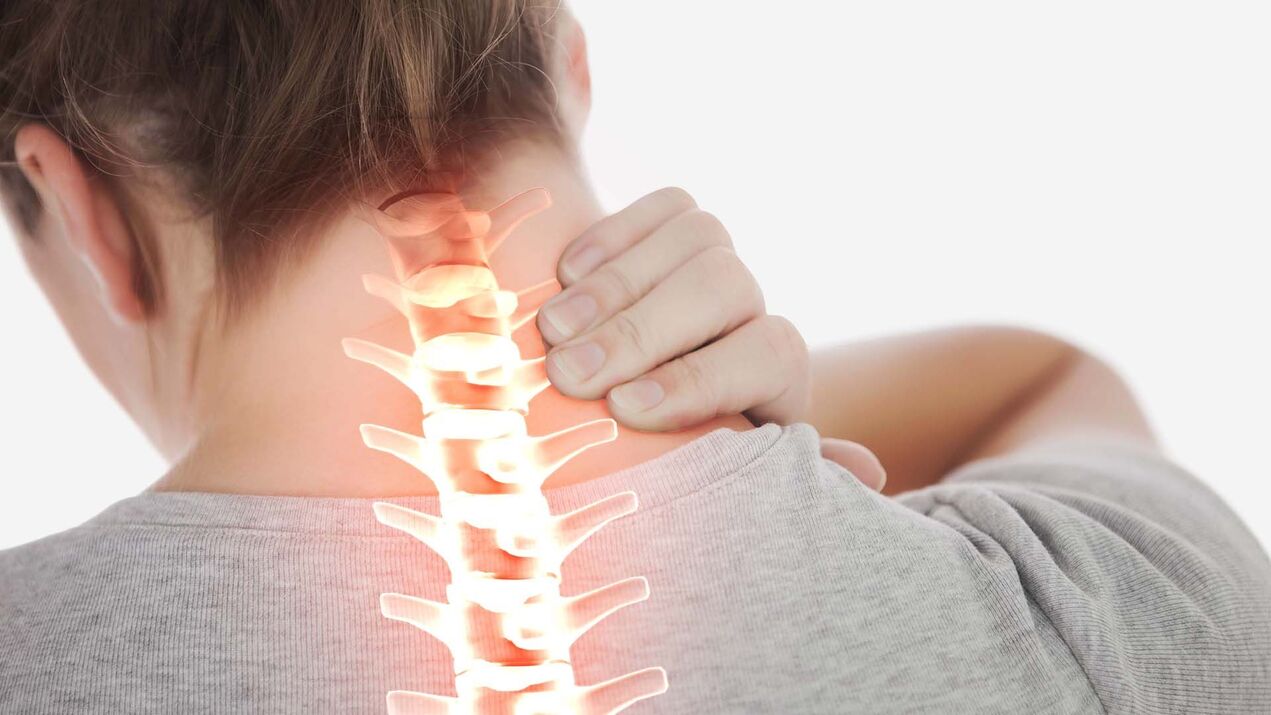
Neck pain is a problem that almost everyone has encountered.This is the most mobile and fragile part of the spine and pain syndromes of varying intensity can arise for completely different reasons.Neck pain rarely indicates a serious illness.However, periodically recurring and persistent neck pain should be a signal to look for the cause of this condition.
Very often it is muscle pain;the cause can also be degenerative changes of the spine, injuries and other (non-vertebrogenic) causes: angina pectoris, infectious, endocrine, rheumatic, oncological diseases, pathology of the lymph nodes, etc.
Neck pain may be accompanied by dizziness, weakness, headache, muscle spasms, pain and numbness in the arms, etc.
Classification, types and nature of pain syndromes
There are different classifications of cervicalgia:
- Depending on the duration of the course, it can be acute (less than 4 weeks), subacute (1-4 months) and chronic (more than 4 months).
- According to the nature of the pain syndrome, aching, dull and stabbing pain is distinguished.
- Depending on the location, the pain is distinguished in the front, back and lateral parts of the neck.When the pain radiates to the head it is called cervicocranialgia and to the shoulder it is called cervicobrachialgia.
- Due to their onset, all neck pain can be divided into 2 large groups: vertebrogenic and non-vertebrogenic:
- Vertebrogenic: occurs as a result of diseases, injuries of the spine.This is the most common group of causes of neck pain.According to statistics it is >70%.The most common cause is muscle pain.It can be caused by pathologies such as myofascial syndromes, muscle-tonic syndromes, myositis, cervical myopathy, bad posture, etc.
- Non-vertebrogenic: caused by other reasons (myocardial ischemia, infectious, endocrine, oncological diseases, damage to lymph nodes, rheumatism, etc.).
Let's look at the individual reasons in more detail.
Causes that cause neck pain
Injuries (fractures, whiplash)

The whiplash mechanism is associated with a sharp flexion of the neck forward or backward with further recoil in the opposite direction.This type of damage is typical of an accident.In this case, stretching of the tendon-ligament system and muscles occurs, destruction of the vertebrae (compression fractures) and intervertebral discs, subluxations and dislocations of the cervical vertebrae and the formation of hernias.
They complain of pain in the neck, which radiates to the shoulders, head and interscapular area;limitation of movements;dizziness;nausea.M.b.impaired vision, swallowing (dysphagia).
Other injuries they can cause include bruises, wounds, and pulled neck muscles.The consequences of a traumatic injury can be neck pain, migraines, muscle spasms, reduced neck mobility, fatigue and vision problems.
Dystrophic diseases of the spine
Osteochondrosis is characterized by age-related degenerative-dystrophic changes in the joints of the spine that occur due to decreased elasticity, flattening and destruction of the intervertebral discs.
The shock-absorbing function of the discs is gradually impaired.This leads to an increased load on the intervertebral joints (facets), arthrosis, radiculopathy - painful syndrome due to crushing of nerve roots by bone growths (osteophytes) and tension in the neck muscles.When the vertebral arteries are compressed, noise in the ears, flickering of the spots in front of the eyes, blurred vision and dizziness occur.
Gradually, the intervertebral discs lose their elasticity.When they are compressed, a protrusion (protrusion) occurs in the spinal canal with the further formation of a hernia.This leads to compression and the development of pathological changes in the spinal cord (myelopathy).As a result, the pain syndrome intensifies, the sensitivity of the arms, legs and scalp is impaired with the development of numbness and paresthesias.Weakness appears in the hands, tendon reflexes change.
The pain is one-sided, excruciating in nature, increases when leaning to the painful side, throwing the head back, then the patient intuitively bends the head forward and to the side opposite to the location of the pain.Osteochondrosis may be accompanied by cervicobrachialgia;cervicocranialgia.
Spondylosis usually accompanies osteochondrosis.With this pathology, bony growths (osteophytes) form at the edges of the vertebral bodies.At the same time, there is a decrease in the size of the intervertebral discs.When adjacent vertebrae fuse, neck mobility is limited.
In spondylolisthesis there is a displacement (slipping) of the vertebra above compared to the one below.This pathology manifests itself as pain in the localization area.The diagnosis is confirmed by x-ray.
Muscle syndromes
Muscle pain - myofascial syndrome
Long-term overload of the neck muscles, sprain of the ligaments and local hypothermia lead to muscle pain.They are accompanied by limited mobility and spasms of the neck muscles.When you palpate (feel) your muscles, they feel tight and painful.
The pain syndrome in myofascial syndrome is of moderate intensity, short in duration, intensifies with neck movements and disappears on its own if untreated.
Tonic muscle syndrome (muscle spasm of the cervicothoracic region)
Clinically manifested by prolonged and persistent muscle tension, their reflex contraction - muscle spasm.The muscles become dense to the touch, swollen and painful.
Trigger points are formed: areas of the most pronounced pain.Neck pain intensifies when you turn your head, flex and extend the cervical spine.It may be accompanied by numbness of the fourth and fifth toes.
Mosite
Inflammation of the muscle fibers develops with neck myositis.The disease most often occurs against the background of hypothermia.It manifests itself as severe pain during movements and impaired muscle tone.Due to the difference in muscle tone, the head tilts to one side and a secondary torticollis forms.
Cervical myopathy
Myopathy or degenerative pathology of muscle tissue is characterized by a decrease in the contractility of the myofibrils, progressive muscle weakness, limitation of movements, decreased tone and development of muscle atrophy with subsequent replacement of muscle fibers with adipose or connective tissue.
Cervical plexitis
Cervical plexitis is a disorder of the cervical nerve plexus.More often it develops against the background of injury or hypothermia.The pain is localized in the area of the anterolateral surface of the neck and radiates to the ear, chest and back of the head.The pain intensifies when coughing, talking and is accompanied by a crawling sensation, paresthesia - a violation of sensitivity in the form of numbness, burning, tingling.
Bad posture
Posture is disrupted when a person spends a lot of time at the computer or is in another monotonous position.Predisposing factors also include using a pillow that is too soft or too high for sleeping.With bad posture, the load on the ligaments and muscles of the neck increases, the head moves forward and a curvature is formed.
Other reasons
Neck pain can also be caused by other non-vertebrogenic causes, for example coronary artery disease (coronary heart disease).In the atypical form, the pain can radiate to the neck, left arm, shoulder.This disease is characterized by changes in the ECG.Clinical symptoms include heaviness in the chest, shortness of breath, weakness with minimal physical activity.
In meningitis (inflammation of the soft meninges), neck and head pain is accompanied by stiff neck, fever, and vomiting.A similar clinical picture is observed with meningismus.To differentiate these conditions, a spinal puncture is performed.
Cervical lymphadenitis, or swollen cervical lymph nodes, is the most common cause of neck pain (about 50% of all cases) in children.This symptom occurs in various infectious and inflammatory diseases (tonsillitis, pharyngitis, otitis, stomatitis, ARVI, influenza, rhinosinusitis, measles, mononucleosis, tuberculosis) and oncological pathology.The pain intensifies when swallowing, palpation (palpation) of the lymph nodes.
Neck pain may accompany juvenile rheumatoid arthritis.This autoimmune connective tissue disease begins before the age of 16 and is characterized by joint damage and extra-articular manifestations.
Other systemic collagenoses that can cause neck pain:
- Ankylosing spondylitis is a connective tissue disease that affects the spine.With this disease, individual vertebrae can fuse together.
- Dermatomyositis is characterized by inflammation of muscle tissue and skin, similar to photodermatosis, primarily in exposed areas of the body.
- Scleroderma includes fibrous-sclerotic changes of the skin, muscles, joints, blood vessels and internal organs.
Neck pain with stiff neck, orthopedic disease with deviation of the neck from the vertical axis is observed.This congenital malformation is diagnosed in early childhood and is more common in girls.
Neck pain accompanies tumor diseases; purulent inflammatory processes: abscesses (limited inflammation of soft tissues), phlegmons (inflammation of soft tissues without clear boundaries); thyroid disease; salivary glands; plexites; osteoporosis; tracheitis (inflammation of the tracheal mucosa); esophagitis (inflammation of the esophageal mucosa); atherosclerosis; Reiter's syndrome; foreign bodies.
With thyroid pathology (diffuse toxic goiter, Hashimoto's thyroiditis), pain syndrome is combined with increased body temperature, feeling of heat, increased sweating, increased heart rate, increased irritability and tearfulness.
Sialadenitis is an inflammation of the salivary glands.The pain intensifies when chewing and swallowing.There is swelling in the area where the salivary glands are located, dry mouth, weakness, chills, and fever.
With a deficiency of minerals (mainly calcium, phosphorus) and vitamins (D 3), bone loss (osteoporosis) develops. The risk of it occurring increases in women during menopause.Osteoporosis of the cervical spine is accompanied by cervicalgia.
Tracheitis is characterized by increased pain when coughing, while esophagitis is characterized by increased pain when eating.
With atherosclerosis (damage to the walls of large arteries with the formation of atherosclerotic plaques that impede normal blood flow) and other vascular pathologies, neck pain is combined with dizziness and tinnitus.
Reiter's syndrome is a complex of symptoms manifested by the classical triad: damage to the genitourinary system (urethritis + prostatitis), joints, conjunctivitis.In most cases it is caused by a mycoplasma infection and has a chronic course.
Localization of neck pain: what problems do they indicate?
Localization of pain helps to correctly determine the cause of neck pain and take the necessary measures in time.
The main causes of pain in the front of the neck are:
- Thyroid pathology.
- Sialadenitis.
- A retropharyngeal abscess is an inflammation of the tissue located in the retropharyngeal space.Neck pain intensifies when swallowing, accompanied by redness of the skin on the anterior surface of the neck, increase in temperature up to feverish levels (38-39°).
- Cervical plexitis.
- Systemic connective tissue diseases (dermatomyositis, scleroderma).The pain is aching, pulling, radiating to the neck and spine.
- Cervical lymphadenitis.
- Atypical form of ischemic heart disease.
- Tracheitis, esophagitis.
- Compression fractures of the cervical vertebrae.
Causes of back neck pain:
- Osteochondrosis, disc protrusion, spinal hernia, spondylosis, spondylolisthesis.
- Myofascial syndrome.
- Ankylosing spondylitis.
- Spinal tuberculosis.
- Osteomyelitis.
- Reiter's syndrome.
- Compression fracture of the cervical vertebral bodies, fracture of the arches and processes of the vertebrae.
Pain on the side of the neck can occur with atherosclerosis;myofascial syndrome;foreign body;tumor process in the pharynx, larynx, thyroid gland.Lateral neck pain can lead to secondary torticollis, as the patient always tries to tilt the head to the painful side.
Who to turn to for neck pain
A therapist, pediatrician or neurologist will help with neck pain.If your neck pain is caused by an injury, you should contact a traumatologist or surgeon.Depending on the cause of the pain, the therapist and pediatrician may also refer the patient to specialists such as a rheumatologist, an infectious disease specialist, a cardiologist, an oncologist, or an otolaryngologist.
Disease diagnosis, tests and examinations
To determine the cause of cervicalgia, the doctor examines the patient, questions him about existing complaints, clarifies the duration of the symptom, the nature of the pain, its localization, irradiation, combination with other symptoms and performs palpation.Determining the cause of neck pain is important for adequate treatment.
If necessary, the following is prescribed:
- consultation of narrow specialists;
- instrumental examination methods: ECG, Holter monitoring, EMG - electromyography (determining the bioelectrical activity of muscles and neuromuscular transmission), electroneurography (determining the speed of transmission of the nerve impulse along the peripheral nerve fibers).
- Cervical spine x-ray, CT, MRI;
- myelography – contrast-enhanced x-ray of the subarachnoid (subarachnoid) space of the spinal cord.
- Ultrasound (ultrasound examination) of salivary glands, thyroid gland;duplex scan (to evaluate the condition of blood vessels and blood flow).
Treatment methods
Treatment of neck pain should be comprehensive.There are conservative treatments aimed at relieving muscle pain, spasm, stopping the inflammatory process, and surgery carried out to stabilize the spine and ensure the outflow of pus.
Conservative treatment methods:
- Drug therapy.Prescribed only by a medical specialist, self-medication is unacceptable!For muscular syndromes, this may be local therapy (use of anesthetic ointments, gels) or the use of systemic drugs aimed at relieving muscle pain and spasms.
- Physiotherapeutic methods of influenza.These include magnetotherapy, phonophoresis, electrophoresis with medicinal substances, ultrasound, laser, UHF (thermal procedure), cryotherapy (cold exposure), SMT (sinusoidal modulated currents), UVT (shock wave therapy), MLT (magnetic field + laser exposure), paraffin/ozokerite applications and others.
- Physical therapy.The set of exercises is selected individually based on the cause of the pain.Physical therapy helps to strengthen the muscles of the neck, back and the formation of correct posture.
- Massage.It can be performed separately or in combination with physical therapy and manual therapy.Improves blood circulation, relieves muscle spasms, normalizes muscle tone.
- Manual therapy.It allows you to relieve muscle tension, pain and remove blockages.
Important: physical therapy, massage, manual therapy are contraindicated during the acute period of pain, as well as in case of injuries!
- Reflexology or influence of acupuncture points using needles, cauterization, hirudotherapy.The combination of points, duration and number of procedures will differ for different pathologies.
- Orthopedic techniques.This is immobilization using a bandage or a Chance collar.It is performed for compression fractures of the cervical vertebrae, in the acute period for muscular syndromes, osteochondosis.
- Taping or kinesio taping is the application of special patches (tapes) to the skin of the neck.It is used to relieve pain, swelling, eliminate muscle spasms and pinched nerve endings, improve blood circulation and lymph flow, and restore after injuries and operations.The schemes for applying the tapes differ for different pathologies.Depending on the method of application, the tapes improve lymphatic drainage, have an anti-inflammatory and analgesic effect, normalize muscle tone and stabilize joints.
Surgical treatment is carried out for spinal hernias (if conservative therapy is ineffective), neoplasms, abscesses, cellulitis and foreign bodies in the neck.
Which drugs to treat
Non-vertebral syndrome is treated by specialists;each group of causes has its own therapy.To relieve muscle pain in the neck, the following groups of drugs are used:
- NSAIDs (non-steroidal anti-inflammatory drugs).They inhibit the enzyme cyclooxygenase (COX).There are COX 1 and COX 2. The use of NSAIDs is a symptomatic therapy aimed at relieving pain and other signs of inflammation.To reduce the risk of side effects, we recommend the use of NSAIDs with selective action on COX 2.
- Local anaesthetics.They are injected into the area where the nerves exit (blockage).
- Muscle relaxants.Helps relieve muscle spasms and relax muscles.
- Preparations that improve tissue microcirculation.
- Steroid hormones (glucocorticoids).Relieves inflammation, tissue swelling, pain.Usually used when NSAIDs are ineffective or in combination with them.
- Vitamins B, C (ascorbic acid), D and minerals: calcium, phosphorus, potassium, magnesium.Calcium is a vitamin and mineral complex recommended for the treatment and prevention of osteoporosis and fractures.
- Chondroprotectors.Improve trophism (nutrition) of cartilage tissue, promote cartilage regeneration.
- Anticonvulsants.Prescribed for seizures and muscle spasms.
Drug therapy is prescribed only after a complete examination and identification of the cause of neck pain.
Prevent neck pain
To prevent neck pain, it is recommended to follow simple rules:
- Properly organize your workplace (illumination, monitor level, distance of the monitor from the eyes and other parameters should comply with generally accepted standards).
- Minimize risk factors: avoid drafts, hypothermia;do not allow sudden bending or tilting of the head, etc.
- Observe your posture, even while working on the computer.
- During breaks, do physical therapy to strengthen your neck and shoulder girdle muscles.
- Optimize physical activity.
- For sleeping it is better to use not a high pillow, but a normal orthopedic pillow, or even better.
- Correct body weight.
- Undergo a medical examination promptly.
Following preventive measures will help maintain health and well-being for many years.Consulting a doctor when the first signs of pathological symptoms appear, and timely treatment will help avoid the chronicity of the process and the development of complications.